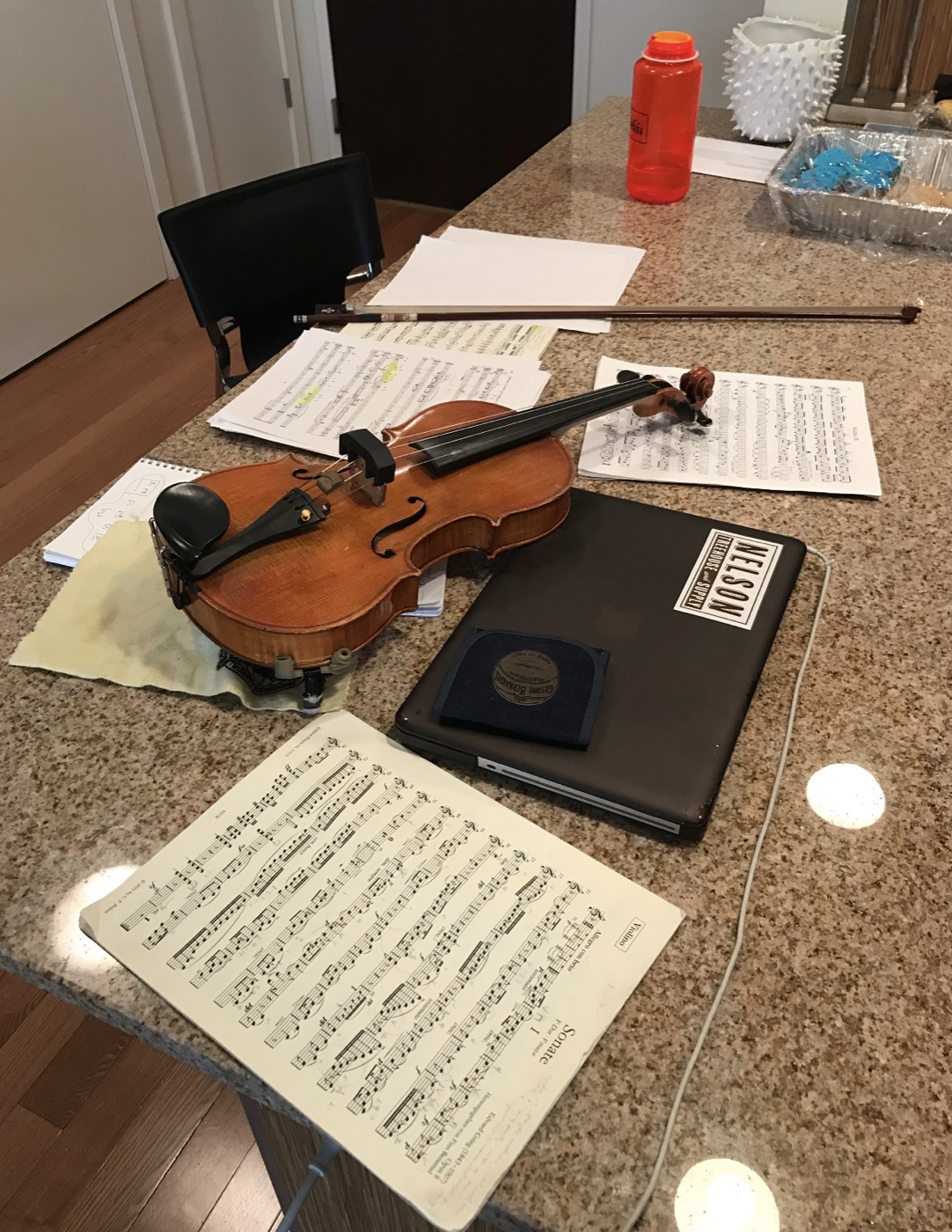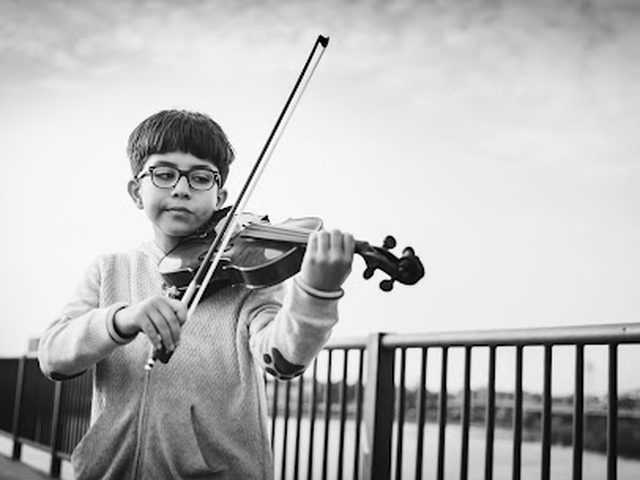
You practiced something all week.
Yesterday, it finally worked.
Today, somehow, it doesn't.
Welcome to learning violin.
Some frustration is a completely ordinary part of learning a difficult physical and musical skill. But that doesn't mean students should spend every practice session miserable—or that frustration should simply be ignored.
The more useful question is: what kind of frustration are you experiencing, and what is it telling you?
Violin Asks You to Learn a Lot of Things at Once
Even something that looks simple from the outside can involve a surprising number of skills.
A beginning violinist might simultaneously be thinking about:
- Where the bow is traveling
- How much pressure they're using
- Where their fingers belong
- Whether the note is in tune
- What rhythm comes next
- How they're holding the instrument
- What the music sounds like
- What they're supposed to remember from the lesson
Eventually, many of these actions become more automatic. At first, they aren't. That's one reason violin can sometimes feel harder before it feels easier.
Productive Frustration Often Sounds Like "Almost"
There is a kind of frustration that often accompanies growth. You can hear what you're trying to do. You can sometimes do it. You understand the idea. But you can't reproduce it reliably yet.
That's the land of almost. Almost in tune. Almost the bow stroke you wanted. Almost through the passage without stopping. Almost able to remember the fingering without looking.
It can be annoying precisely because you're close enough to recognize the difference.
But "almost" isn't the same as failing. Often, it's evidence that a skill is actively developing.
Progress Isn't Always Visible While It's Happening
Music learning rarely follows a perfectly smooth line upward. A student may struggle with something for several days and then suddenly find it easier. Another skill may seem secure and temporarily become messy when something new is added.
A student who is concentrating on better bow technique, for example, may temporarily make more mistakes elsewhere because their attention is occupied by the new skill.
Learning can look messy from the inside. That's why evaluating progress based on one difficult practice session—or even one difficult week—can be misleading.
But Constant Distress Isn't the Goal
"Struggle is part of learning" can become an unhelpful idea if it's used to dismiss every negative experience.
If a student regularly leaves practice defeated, dreads picking up the instrument, feels ashamed about mistakes, or repeatedly has no idea how to approach an assignment, something deserves attention.
The answer isn't necessarily "practice harder." It might be:
- The task might be too large
- The instructions may be unclear
- The practice strategy may not match the problem
The student may need different repertoire, a slower pace, more choice, a technical adjustment, or simply a conversation with their teacher.
"Good teaching doesn't eliminate challenge. It helps make challenge workable."
When You're Frustrated, Make the Problem Smaller
One of the most useful practice skills is learning not to fight an entire problem at once.
- If four measures aren't working, try one
- If one measure isn't working, try two notes
- If playing the passage is overwhelming, remove the rhythm
- Or remove the bow
- Or slow it down enough that you can actually observe what's happening
You can ask: What is the smallest part of this that I can understand and change?
That question turns frustration into information.
Parents Don't Have to Fix Every Difficult Moment
Watching your child struggle with something can be uncomfortable. It's tempting to immediately correct the problem—or, on the other end of the spectrum, insist that they keep going because "practice is supposed to be hard."
There is another option: curiosity.
- Instead of "You know how to do this," try "Which part is giving you trouble?"
- Instead of "Just do it again," try "Should we make it smaller?"
Children can gradually learn that frustration doesn't automatically mean stop, fail, or push harder. Sometimes it means change the approach. That's an important practice skill in its own right.
Adults Need Permission to Be Beginners, Too
Adults can be particularly unforgiving of themselves when learning violin.
We spend most of our days doing things we're already relatively competent at. Then we pick up a violin and suddenly can't make our hands do something that looks deceptively simple. That can be humbling.
Being a beginner means spending time in that gap between understanding something and being able to do it. You aren't supposed to have mastered the thing you're currently learning. That's why you're learning it.
So How Much Frustration Is Normal?
Some frustration is normal when:
- The challenge is specific
- You understand roughly what you're trying to accomplish
- There are moments of success mixed with difficulty
- Changing the strategy sometimes helps
- You can notice progress over time
- The overall experience still contains curiosity, satisfaction, or enjoyment
Frustration deserves more attention when:
- You consistently don't understand what you're supposed to do
- Practice repeatedly ends in defeat or conflict
- Mistakes feel shameful rather than informative
- The difficulty never seems to adjust
- You are afraid to ask questions
- The learning environment makes you feel incapable
Learning violin should challenge you. It shouldn't require you to believe you're bad at learning.
The Goal Isn't Frustration-Free Learning
I don't think a good music education removes every difficult moment. Some of the most satisfying musical experiences happen because something was once hard and gradually became possible.
But difficulty needs support. Students need tools for breaking problems down, permission to ask questions, appropriately sized challenges, and enough successful experiences to remember that progress is possible.
Over time, that's part of what practicing teaches us: not that difficult things magically become easy, but that when something isn't working, we can listen, adjust, try something different, and continue.
Lessons Built Around Supportive Rigor
At Vibrations Violin Studio, lessons are built around supportive rigor: meaningful challenge combined with individualized pacing, practical strategies, curiosity, and room to make mistakes.
Students don't need to arrive already knowing how much they should practice or how to be good at learning violin. Learning how to learn is part of the work.
Get Started