One of the most exhausting parts of music lessons for many families isn't the lesson itself. It's the daily question:
"Did you practice yet?"
Then comes another reminder. And maybe another. Eventually, something that was supposed to bring music into a child's life can start to feel like another household chore everyone is arguing about.
If that sounds familiar, it does not automatically mean your child dislikes violin or that lessons aren't working.
Beginners are still learning how to practice. They are also learning how to remember a new responsibility, begin a task that may feel difficult, notice their own progress, and understand what productive practice actually feels like.
The goal is not necessarily to eliminate every reminder. The more useful goal is to gradually move some of the responsibility from the adult to the student.
First: Practice Independence Is a Skill
Adults sometimes assume that once a child has been assigned something to practice, they should be able to independently remember it, organize themselves, know what to work on, and stay focused until they are finished.
That's actually several skills at once.
A beginner may genuinely enjoy violin and still need support getting started. They may remember that they are supposed to practice but not remember exactly what the teacher asked them to do. Or they may avoid beginning because a particular section feels difficult.
Rather than treating independence as a prerequisite for lessons, I prefer to think of it as something students gradually learn.
Make Starting Easier
Often the biggest obstacle is not the practice session. It's the transition into it.
A violin packed in its case, stored in a closet, with music in another room creates several small steps before a student has played a single note.
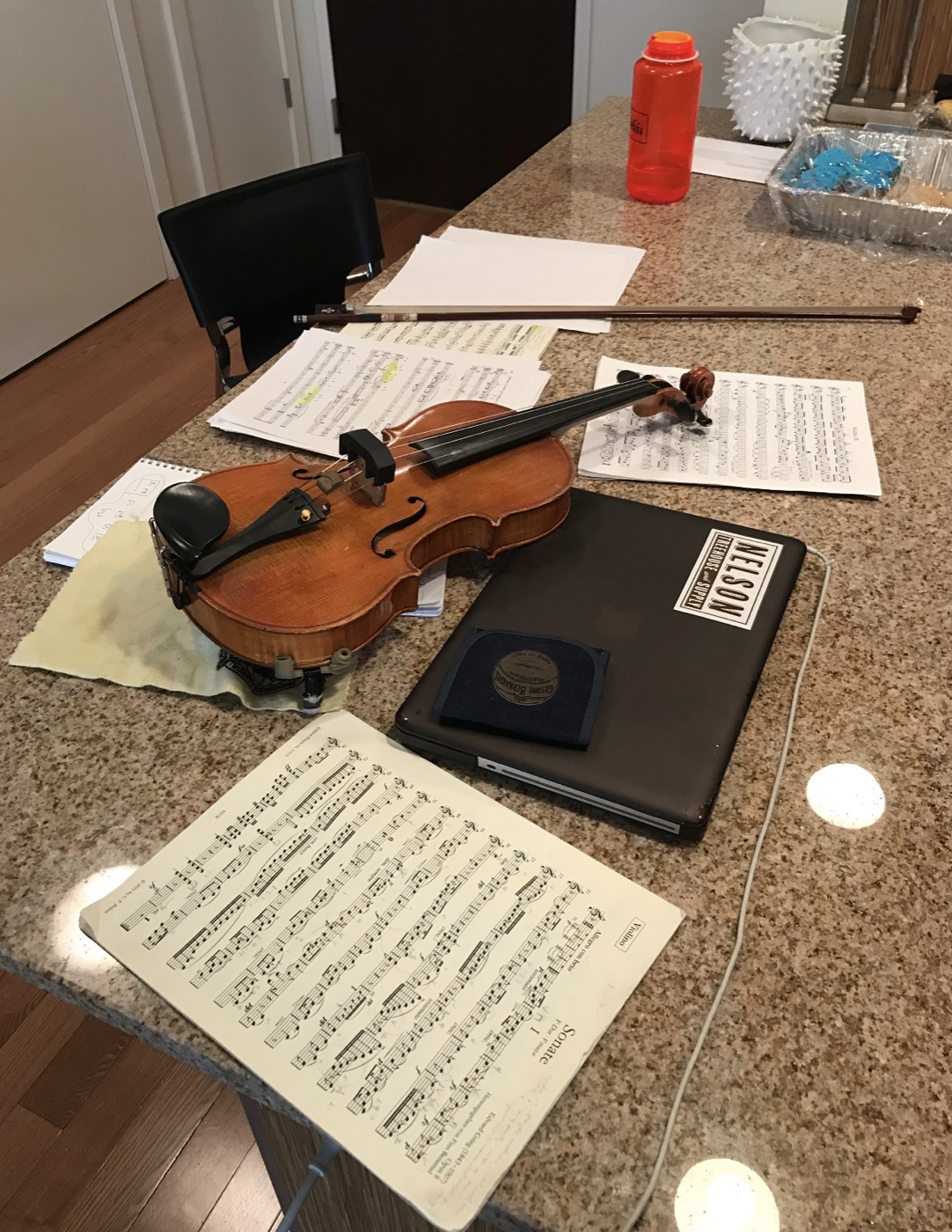
When practical and safe for the instrument, reducing some of that setup friction can help. Music can stay organized in one place. A music stand can already be available. Practice can happen at a predictable point in the day.
The simpler the beginning of the routine feels, the less energy everyone has to spend negotiating about when it will happen.
Attach Practice to an Existing Routine
Children often respond better to a predictable rhythm than to repeated spontaneous reminders.
Instead of asking throughout the evening, families might connect violin to something that already happens regularly: after a snack, before dinner, after homework, or before another favorite activity.
The exact time matters less than consistency.
Eventually, the routine itself begins to carry some of the reminder.
Make the Goal Small Enough to Begin
A child who hears "go practice violin" may interpret that as a large, undefined task.
A more concrete starting point can feel much more manageable:
"Let's play that bow exercise three times."
"Can you show me the part you worked on with your teacher?"
"Let's do ten focused minutes and then see how it feels."
Short, specific practice can be much more productive than a longer session spent distracted, frustrated, or negotiating.
For beginners especially, consistency usually matters more than turning every practice into a marathon. If you're not sure what a reasonable session length even looks like, how much beginner violin students actually need to practice breaks down realistic ranges by age and stage.
"Small choices can change practice from something being done to a child into something they are learning to participate in."
Give the Student Something to Own
Student agency matters.
That doesn't mean children should have complete responsibility for designing their own curriculum. It means they should gradually have meaningful choices inside the learning process.
A student might choose which piece to begin with, decide whether to work on rhythm or bowing first, choose a favorite piece to finish with, or identify the section they most want help improving.
Small choices can change practice from something being done to a child into something they are learning to participate in.
Notice More Than Whether the Notes Were Correct
If the only feedback a child hears is about mistakes, practicing can quickly start to feel like a daily evaluation.
Parents can also notice process:
- “You got started without much help today.”
- “That part sounded easier the third time.”
- “You stayed with that even when it was frustrating.”
- “You remembered what your teacher asked you to work on.”
Those observations help children recognize forms of progress that can otherwise be difficult to see. If you're wondering what that healthy beginner progress actually looks like from the outside, is my child progressing normally in violin lessons covers what to expect and when quieter growth is still real growth.
Don't Turn Every Difficult Day Into a Motivation Crisis
Some practice days will be messy.
A student can love music and still be tired. A new skill can temporarily feel impossible. A normally cooperative child can have a day when five minutes is plenty.
One difficult practice session doesn't tell you very much about whether a child should continue violin.
Patterns are more informative than isolated bad days.
If resistance is persistent, intense, or growing over time, that's useful information to bring to the teacher. The practice approach, repertoire, expectations, difficulty level, or lesson structure may need adjustment—and it's worth reading about why kids quit violin and what actually helps if that resistance isn't easing up.
Let the Teacher Help With the Practice Problem
Parents should not have to solve every practice problem by themselves.
One of the teacher's jobs is to help make home practice understandable.
If a student routinely leaves lessons unsure what to do, consistently becomes overwhelmed by assignments, or needs extensive parent interpretation before practicing, the solution may not be more reminders.
The student may need clearer goals, smaller assignments, a different explanation, or more ownership over what they are working toward.
Good communication between teacher, student, and parent can prevent small practice frustrations from becoming larger conflicts—it's part of what's worth asking about when you're evaluating whether a violin teacher is a good fit.
The Long-Term Goal Is Not Perfect Compliance
Ultimately, I don't want students practicing only because an adult successfully reminded them enough times.
I want them to gradually understand what practice is for.
Practice is where a difficult measure becomes familiar. It's where an awkward bow movement starts feeling more natural. It's where students discover that repeating something thoughtfully can actually change what they are capable of doing.
That understanding develops slowly.
A sustainable practice relationship is not built by winning every daily negotiation. It is built through routines, achievable goals, appropriate support, and repeated experiences of noticing that effort can lead somewhere.
A Healthier Question for Parents
Instead of asking only:
"How do I make my child practice without reminding them?"
it may help to ask:
"What support would help my child become a little more independent with practice than they were a few months ago?"
That change makes room for growth.
A seven-year-old beginner, a twelve-year-old intermediate student, and a teenager with several years of experience should not need exactly the same kind of support.
The goal is gradual ownership—not instant independence.
Frequently Asked Questions
How often should I remind my child to practice violin?
Occasional reminders are normal, especially for younger beginners. If practice consistently requires several reminders every day, it can help to attach practice to an existing routine and shrink the starting goal so beginning feels easier.
What should I do if my child refuses to practice violin?
Look for the source of the resistance before adding pressure. The assignment may feel unclear, too long, or disconnected from what the student is currently interested in. A shorter, more specific goal—and a conversation with the teacher—is often more effective than insisting.
How long should beginner violin practice sessions be?
Many beginners do well with short, focused sessions rather than long ones. The right length depends on age and attention span—see how much beginner violin students actually need to practice for age-based ranges.
Should parents sit with children while they practice violin?
It depends on the student's age and stage. Younger beginners often need an adult nearby to help with setup and focus. As students build independence, parents can gradually step back to noticing and encouraging rather than directing every moment.
Violin Lessons Should Help Families Build Sustainable Routines
At Vibrations Violin Studio, I work with students and families to make practice expectations realistic, understandable, and appropriate for the individual learner.
That may include adjusting how an assignment is explained, helping a student identify manageable goals, changing repertoire, or simply recognizing that learning habits develop over time.
For families in Denver considering beginner violin lessons, practice does not need to become another arena for perfectionism. It can become a place where students gradually learn responsibility, persistence, curiosity, and ownership of something creative.
If you're wondering what violin lessons might look like for your child, you're welcome to start with a low-pressure conversation.
Book a 15-Minute Intro Call