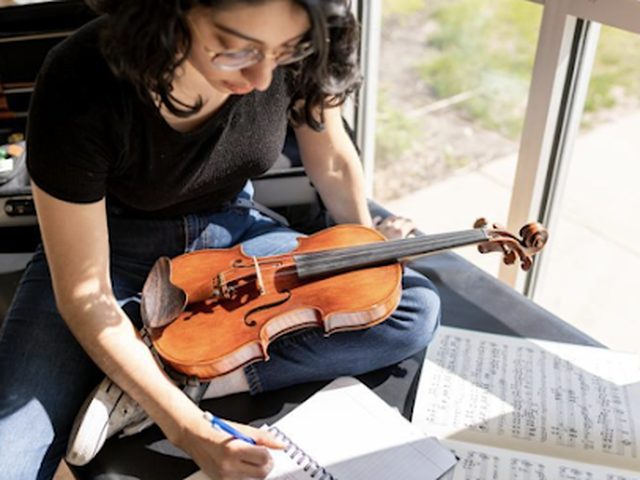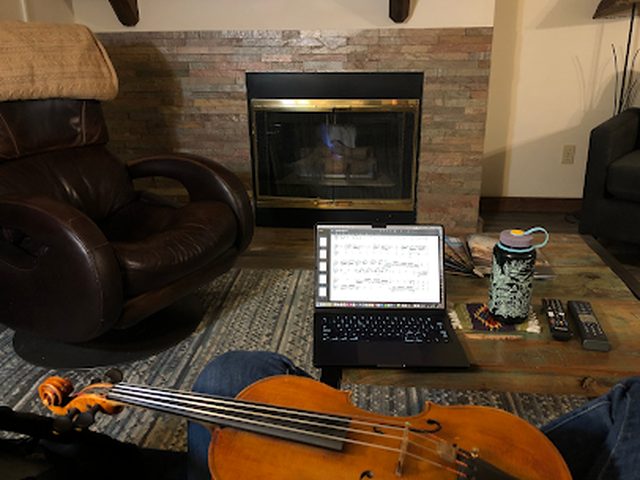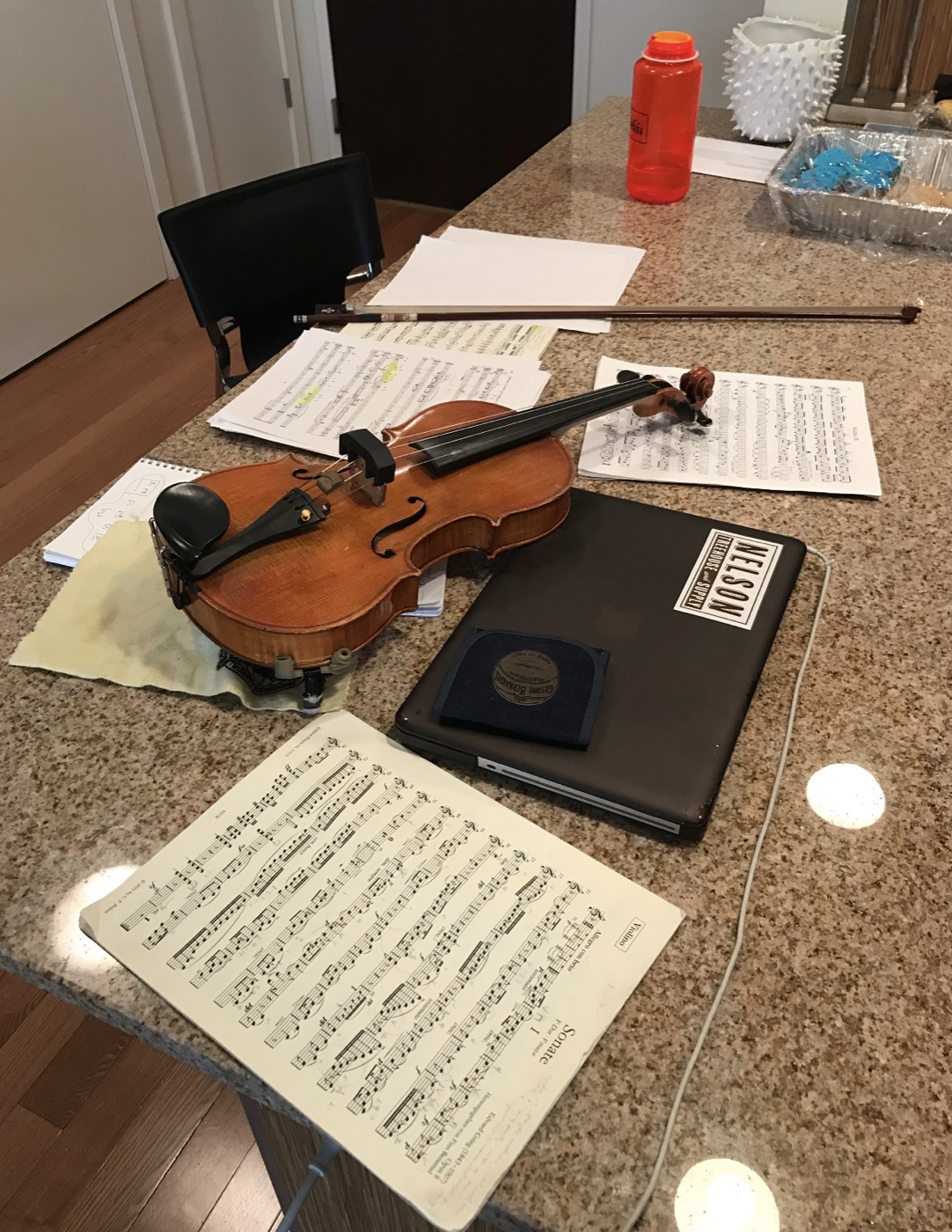
Maybe you played violin as a child and haven't opened the case in twenty years.
Maybe you made it through a few years of school orchestra, stopped sometime around high school, and have periodically wondered what it would feel like to play again.
Or maybe "returning" means something much more recent. Life got busy. Your instrument sat untouched for a few years. Now you miss it.
Whatever brought you back, returning to violin as an adult can be a strange experience: you're not exactly a beginner, but you may not feel like the violinist you remember being, either.
That's normal. And you don't need to get yourself "back in shape" before taking lessons again.
You May Remember More Than You Think
One of the interesting things about returning to an instrument is that knowledge doesn't always come back evenly.
You might immediately remember how to hold the violin but struggle to read a passage you once would have found easy. Your fingers may recognize part of a scale while your bow feels surprisingly unfamiliar. You may remember the sound you want long before your hands can reliably produce it.
That's okay. Learning an instrument involves many interconnected skills: listening, coordination, reading, physical habits, musical memory, and technique. They don't necessarily disappear—or return—at the same rate.
Instead of asking, "Why can't I still do this?", it can be more useful to get curious: "What is still here, and what needs rebuilding?" That's a much better starting point.
Your Previous Experience Still Counts
Returning adults sometimes minimize what they already know because their current playing doesn't match their memories.
But previous musical experience gives you something valuable to build from. You may already understand things like:
- How a phrase should sound
- What being in tune feels like
- Basic musical notation
- Rhythm and pulse
- How the instrument responds
- What focused practice feels like
- How much repetition learning music sometimes requires
Exactly what remains will vary enormously from person to person.
A thoughtful return to violin isn't about pretending you're a complete beginner or expecting yourself to immediately resume where you stopped. It's about figuring out your current starting point.
Your Adult Brain May Approach Violin Differently
You aren't the same learner you were at 10, 14, or 18.
As an adult, you may be better able to articulate what isn't working, understand explanations, notice patterns, make deliberate practice decisions, and connect technique with a larger musical goal.
You also bring your adult interests with you. Perhaps the repertoire you were assigned as a child isn't what you want anymore. Maybe you're interested in classical music now even though you weren't then—or you'd rather explore fiddle, folk, pop, film music, or another style.
Returning to violin can be an opportunity to build a musical life that belongs to the person you are now.
"You don't have to earn the right to come back."
The Frustrating Part: You May Know What Good Playing Sounds Like
There's a particular challenge returning musicians sometimes face. Your musical ear may be ahead of your current physical ability.
You know what you want the violin to sound like. You may even remember being able to produce something closer to that sound. But your hands haven't caught up yet.
That gap can make early playing feel more frustrating than it would for someone who has never played before.
Try not to interpret that gap as evidence that you've "lost it." It may simply mean that your musical awareness returned before some of the physical coordination did. Those skills can be rebuilt.
You Probably Don't Need to Start Completely Over
Returning doesn't necessarily mean opening the first beginner book and spending months retracing every step. It also doesn't mean skipping fundamentals because you learned them once.
A good teacher can help determine which foundations are still secure and which ones would benefit from attention.
Sometimes a small technical adjustment unlocks something quickly. Other times, slowing down and rebuilding a fundamental skill is exactly what makes more advanced playing comfortable again.
The goal isn't to prove how much you remember. The goal is to create a foundation that supports where you'd like to go next.
Your Old Violin May Need Some Attention, Too
If your instrument has been sitting in a closet for years, don't assume it's ready to play immediately.
Strings age. Bows need rehairs. Bridges can shift. Pegs may become difficult to use. Instruments that have been stored for a long time may benefit from being checked by a qualified violin shop before you begin playing regularly.
If you no longer own an instrument, renting can also be a perfectly reasonable way to return without making a large purchase immediately.
You don't need to solve every equipment question before reaching out to a teacher. Instrument setup can be part of the conversation about getting started again.
Practice Doesn't Have to Look Like It Did When You Were a Kid
Returning adults often have jobs, relationships, families, responsibilities, and very full calendars. You may not have an uninterrupted hour every day for violin.
Fortunately, meaningful practice doesn't require recreating your childhood practice schedule. A focused 10 or 20 minutes can accomplish quite a lot when you know what you're listening for and what you're trying to change.
Consistency usually matters more than constructing an ideal practice routine that doesn't fit your actual life. Your musical life needs to be sustainable enough that you want to keep having one.
You Don't Have to Earn the Right to Come Back
You don't need to practice for a month before contacting a teacher. You don't need to remember all your scales. You don't need to apologize for how long it has been. And you don't need an impressive reason for returning.
Maybe you miss making music. Maybe you've wanted to come back for years. Maybe something recently reminded you of how it felt to play. Maybe you're simply curious about who you would be as a violinist now.
That's enough.
Returning to violin isn't about recovering an earlier version of yourself perfectly. It can be about discovering what music has to offer the person you've become.
Looking for Violin Lessons as a Returning Adult?
Vibrations Violin Studio offers individualized violin instruction for adults in Denver and online. Lessons are adapted around your current experience, musical interests, goals, and the way you learn—not around an assumption that every returning player should follow the same path.
If you're wondering what starting again could look like, a short discovery call is an easy place to begin.
Get Started