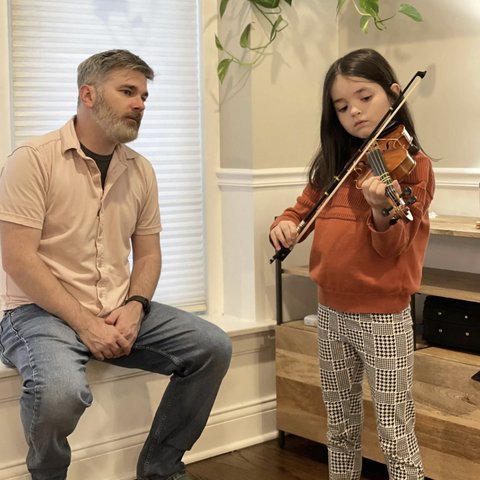
If your child is about to begin violin lessons, one of the first practical questions is: what size violin does my child need?
Children don't play smaller "toy" versions of the violin. They play fully functional fractional violins—1/16, 1/8, 1/4, 1/2, and so on—built to match a growing child's proportions. Choosing the right one makes holding the instrument, reaching the notes, and drawing a good sound much easier from the very first lesson.
The Short Answer: Measure the Arm, Then Check the Fit
Violin size is determined by arm length, not age. Measure your child's left arm from the base of the neck to the center of the palm, with the arm extended and turned palm-up, then compare that measurement with a violin size chart. Finally, confirm the fit with the actual instrument—ideally with help from a teacher or violin shop.
Age ranges can give you a rough idea, but children of the same age can vary a great deal in arm length, which is why sizing guides from both Shar Music[1] and Johnson String Instrument[2] treat measurement as more reliable than age.
Violin Size Chart for Kids: 1/32 Through 4/4
The chart below uses the arm measurements and approximate ages published in Shar Music's string instrument sizing guide.[1] Shar describes the ages as general guidelines only—measurement should come first.
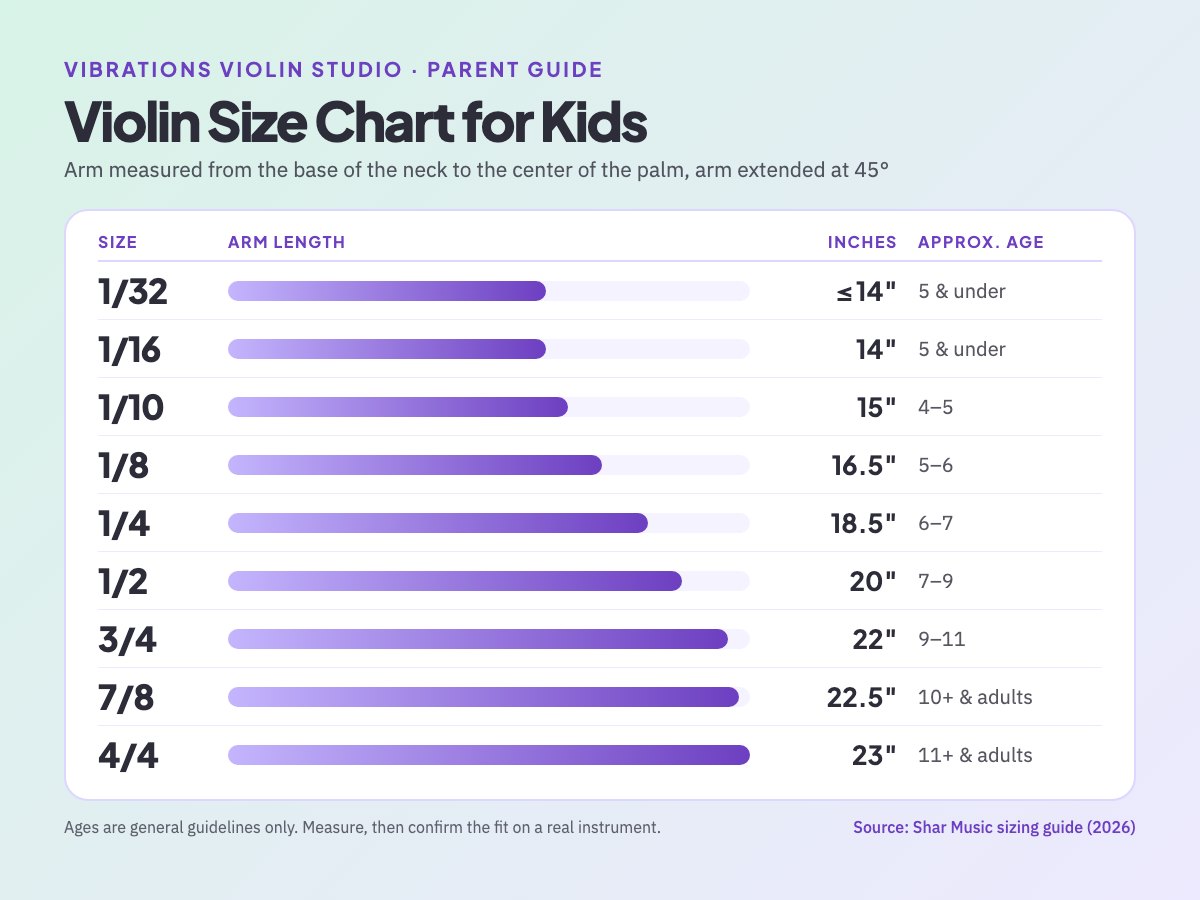
| Violin size | Arm length (neck to center of palm) | Approximate age |
|---|---|---|
| 1/32 | 14 in. and under | 5 and under |
| 1/16 | 14 in. | 5 and under |
| 1/10 | 15 in. | 4–5 |
| 1/8 | 16.5 in. | 5–6 |
| 1/4 | 18.5 in. | 6–7 |
| 1/2 | 20 in. | 7–9 |
| 3/4 | 22 in. | 9–11 |
| 7/8 | 22.5 in. | 10+ and adults |
| 4/4 (full size) | 23 in. | 11+ and adults |
Published charts don't all agree to the inch—even different guides from the same retailer list slightly different numbers—so treat any chart as a starting point rather than a final answer. If your child lands between two sizes, Shar Music recommends going slightly smaller for comfort and healthy technique.[3]
Fractional sizes aren't only for children, either. Shar Music notes that some adults with shorter arms or smaller hands find a 3/4 violin more comfortable than a full-size instrument,[1] and one of my own adult violin teachers played a 7/8. If you're a smaller adult, measure the same way and choose the size that fits you.
How to Measure Your Child's Arm for a Violin
You'll need a soft measuring tape and a second pair of hands. Following Shar Music's measuring method:[1]
- Extend the left arm to the side. Have your child stand and hold their left arm straight out to the side, parallel to the floor and in line with the shoulders.
- Swing it forward 45°. Move the arm forward so it sits at about a 45-degree angle to the shoulders, and turn the palm up toward the ceiling.
- Measure neck to palm. Measure from the base of the neck, where it meets the shoulder, to the center of the palm.
- Compare with the chart. Find the closest arm length in the chart above. If the measurement falls between two sizes, start with the smaller one.
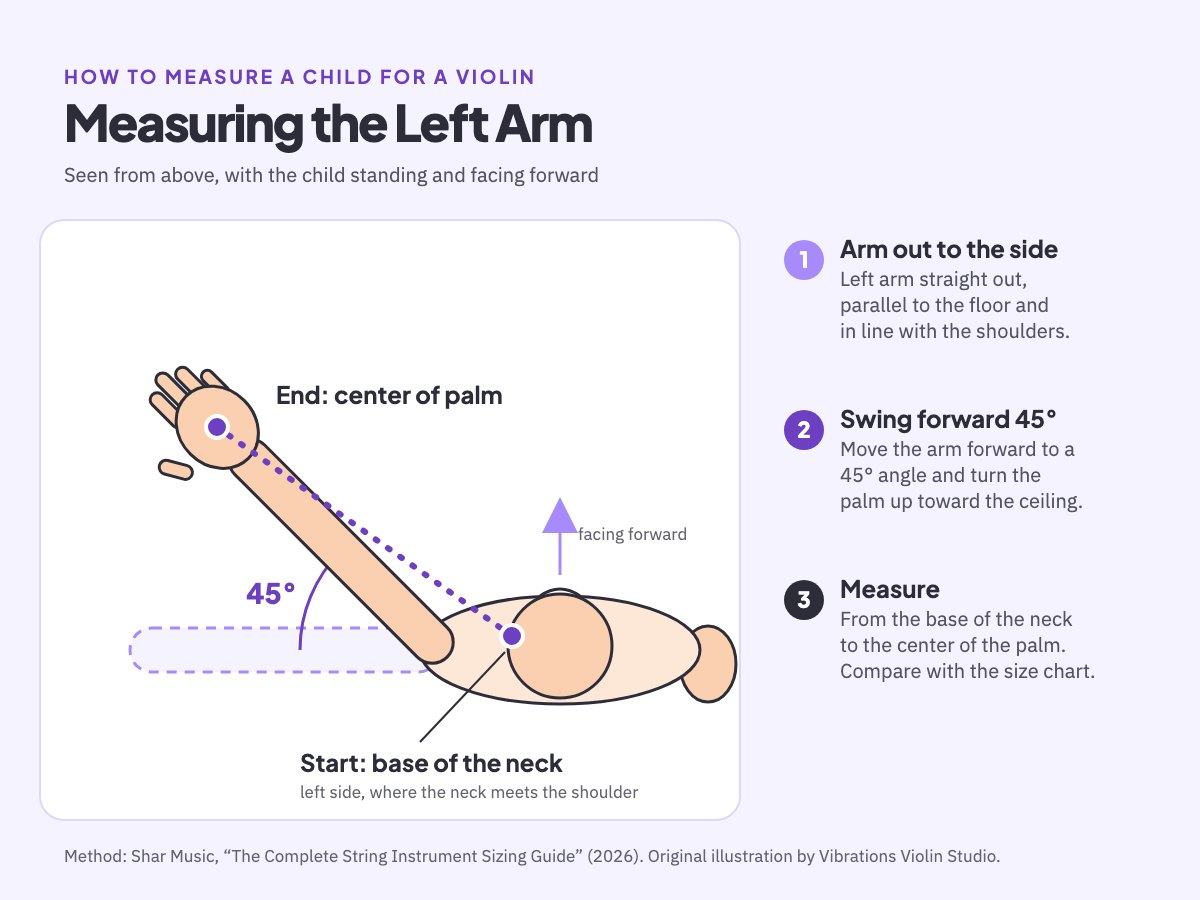
Use the same method every time you re-measure. Different shops sometimes measure to different points on the hand, and mixing methods is one of the easiest ways to end up with a confusing result.
How to Check the Fit With the Actual Violin
A tape measure gets you close. The instrument itself tells you whether the size truly works. Johnson String Instrument suggests two simple checks:[2]
- Place the violin on your child's left shoulder and have them extend the left arm straight out under the instrument, palm up. The scroll should reach about the wrist—no further than the bottom of the palm.
- Have your child bend the arm and hold the neck of the violin as if playing. The elbow should be bent at roughly 90 degrees.
Also watch how your child looks and feels. Raised or tense shoulders, a straining reach for the scroll, or difficulty reaching first position comfortably are all signs the instrument may be too large.
Why Not Buy a Violin to Grow Into?
It's an understandable instinct—kids grow, and a bigger instrument seems like it will last longer. But both Johnson String Instrument[2] and Shar Music[1] name sizing up "for growth" as one of the most common sizing mistakes.
A violin that's too large forces a child to compensate: shoulders creep up, the left arm overreaches, and the bow becomes harder to control. Over time that can build tension and habits that are difficult to undo. It's also discouraging. When the instrument is hard to hold, a child may decide that they are the problem.
The right size is the one that fits today.
"A violin that fits your child today will teach them far more than a violin they might fit next year."
Starting at Age Three: Why I Often Begin With a Box Violin
Some children can begin violin as young as three. For these very young beginners, I often recommend starting with a Suzuki-style box violin before moving to a real fractional instrument.
A box violin is a simple practice model: a small box with a wooden stick attached for the neck, decorated to look like a violin. It doesn't make a sound, and that's the point. It lets a young child learn the parts of playing that come before sound. Many Suzuki-style beginnings also pair the box violin with a simple practice bow, such as a pencil or short dowel.
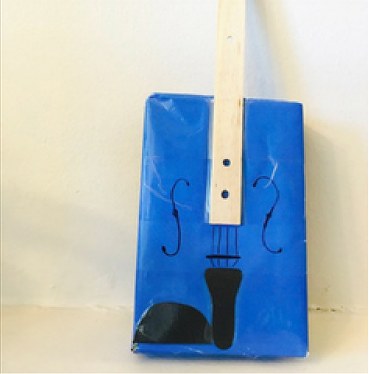
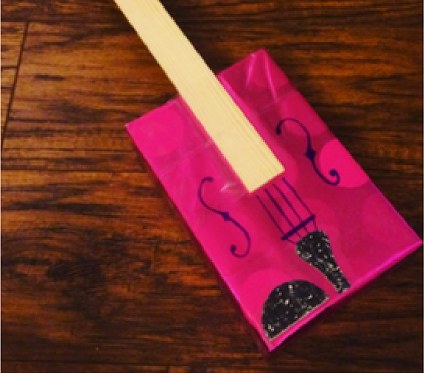
With a box violin and practice bow, a young beginner can practice:
- Standing in a balanced, relaxed playing posture
- Placing the violin on the shoulder and holding it with the left arm
- A relaxed bow hold, with the fingers and a soft, bent thumb in place
- Up-and-down bowing motions with the bow arm
- Bringing the bow to the violin as part of one simple routine
- Moving between rest position and playing position, and other simple instrument routines
- Carrying, caring for, and setting down the violin and bow safely
- Following short, playful instructions during a lesson
When those habits feel familiar and your child is ready, we move to a properly sized real violin, measured and fitted the same way as for any other child. Not every Suzuki teacher uses a box violin, and it isn't a requirement of Suzuki teaching. It's simply a step I've found helpful for many very young students. If you're still deciding whether your child is ready to begin at all, how old a child should be to start violin covers the signs of readiness in more detail.
Renting vs. Buying: Planning for New Sizes
Because children outgrow instruments, renting is often the most practical choice for young players. Johnson String Instrument notes that many young students move up a size every one to two years,[2] and Shar Music suggests checking fit every 6–12 months.[4]
Many rental programs let you exchange sizes as your child grows, and some apply rental payments toward a future purchase. Ask about both when you compare shops. For a fuller look at the decision—including how much to spend and where to shop in the Denver area—see my guide on how to buy your first violin without wasting money.
Signs it may be time for the next size include a cramped left elbow, a scroll that no longer reaches the wrist, or a child who has simply had a growth spurt. A quick re-measure, plus a check with your teacher, will tell you whether to move up.
Preparing for the First Lesson
You don't need to have everything figured out before the first lesson. A few simple steps help:
- Measure your child's arm and write down the number
- Ask your teacher before renting or buying, especially for a child under five
- Have the violin shop confirm the size and setup in person
- Bring the instrument (or box violin) to the first lesson so fit can be checked together
If you're wondering what that first lesson will actually involve, what happens during your first violin lesson walks through it step by step.
Frequently Asked Questions
Can a 3-year-old start violin lessons?
Some three-year-olds can begin successfully when lessons are short, playful, and supported by a parent at home. In my studio, very young beginners often start with a box violin before moving to a real fractional violin.
What is the difference between a 1/8 and a 1/4 violin?
A 1/4 violin is the larger of the two. On Shar Music's sizing chart, a 1/8 corresponds to an arm length of about 16.5 inches (roughly ages 5–6) and a 1/4 to about 18.5 inches (roughly ages 6–7). If your child falls between sizes, Shar Music recommends going slightly smaller.
Should I buy a bigger violin for my child to grow into?
No. A violin that is too large makes posture, reaching, and bowing harder, and can lead to tension and frustration. Choose the size that fits now and plan to move up when your child grows.
How often should I check my child's violin size?
Checking fit every 6–12 months is a helpful habit, and sooner after a growth spurt. Many young students move up a size every one to two years.
Can I measure my child for a violin at home?
Yes. All you need is a soft measuring tape and a helper. Measure from the base of the neck to the center of the palm with the arm extended, then confirm the fit with a teacher or violin shop before renting or buying.
Sources
- Shar Music, “The Complete String Instrument Sizing Guide” (2026). https://www.sharmusic.com/blogs/all/the-complete-string-instrument-sizing-guide Back to text: abcdefg
- Johnson String Instrument, “How to properly size a violin for a child” (2026). https://www.johnsonstring.com/resources/articles/music-students/violin-sizing-for-children/ Back to text: abcd
- Shar Music, “How to Choose Your First Instrument: A Guide from Shar Music” (2025). https://www.sharmusic.com/blogs/all/how-to-choose-your-first-instrument-a-guide-from-shar-music Back to text
- Shar Music, “Understanding Instrument Sizes: A Parent’s Guide to Choosing the Right Fit” (2025). https://www.sharmusic.com/blogs/all/understanding-instrument-sizes-a-parent-s-guide-to-choosing-the-right-fit Back to text
Not Sure Which Size Is Right?
At Vibrations Violin Studio, I'm happy to help families think through sizing, box violins, and renting before you spend anything.
Beginner-friendly violin lessons for children—including very young beginners—are available in central Denver and online. New families can start with a free 15-minute conversation to ask questions and see whether the studio is a good fit.
Get Started