Starting something new can feel exciting...and a little intimidating.
Whether you're considering violin lessons for yourself or your child, it's completely normal to wonder what that first lesson will actually be like.
Will you be expected to play right away? What if you've never touched a violin before? Will your child feel shy? Will you feel behind? Will everyone else already know what they're doing?
I hear questions like these all the time, and the good news is this: your first violin lesson isn't about proving anything.
It's about getting to know one another, building a comfortable foundation, and taking the first step toward learning in a way that feels encouraging—not overwhelming.
Before Your First Lesson
One of the most common questions I receive is:
"Do I need to have a violin already?"
Not necessarily.
If you already have an instrument, wonderful—bring it with you.
If you're still deciding whether to rent or buy, that's completely okay too. We can talk through your options and make sure you're starting with an instrument that's appropriately sized and set up for success. If you're still in that stage, you might also enjoy reading my guide to how to buy your first violin, where I walk through what matters (and what surprisingly doesn't).
The most important thing you need for your first lesson isn't experience.
It's curiosity.
Before We Play a Single Note
One of my favorite parts of a first lesson actually happens before anyone picks up the violin.
I get to learn about you.
Maybe your child has been fascinated by the violin since hearing it in a movie. Maybe you've always wanted to learn but convinced yourself you missed your chance. Maybe music has always been part of your family, or maybe this is something entirely new.
Every student arrives with a different story, and I think that's worth starting with.
Understanding what excites you—and what feels intimidating—helps me tailor lessons to who you are, rather than teaching every student exactly the same way.
You'll Learn More Than You Think
People are often surprised by how much happens during a first lesson.
Depending on your experience and age, we might explore:
- How to hold the violin comfortably
- How the bow works
- Simple posture and balance
- Making your very first sounds
- Easy rhythm activities
- Listening skills
- Caring for your instrument
- What practicing at home can realistically look like
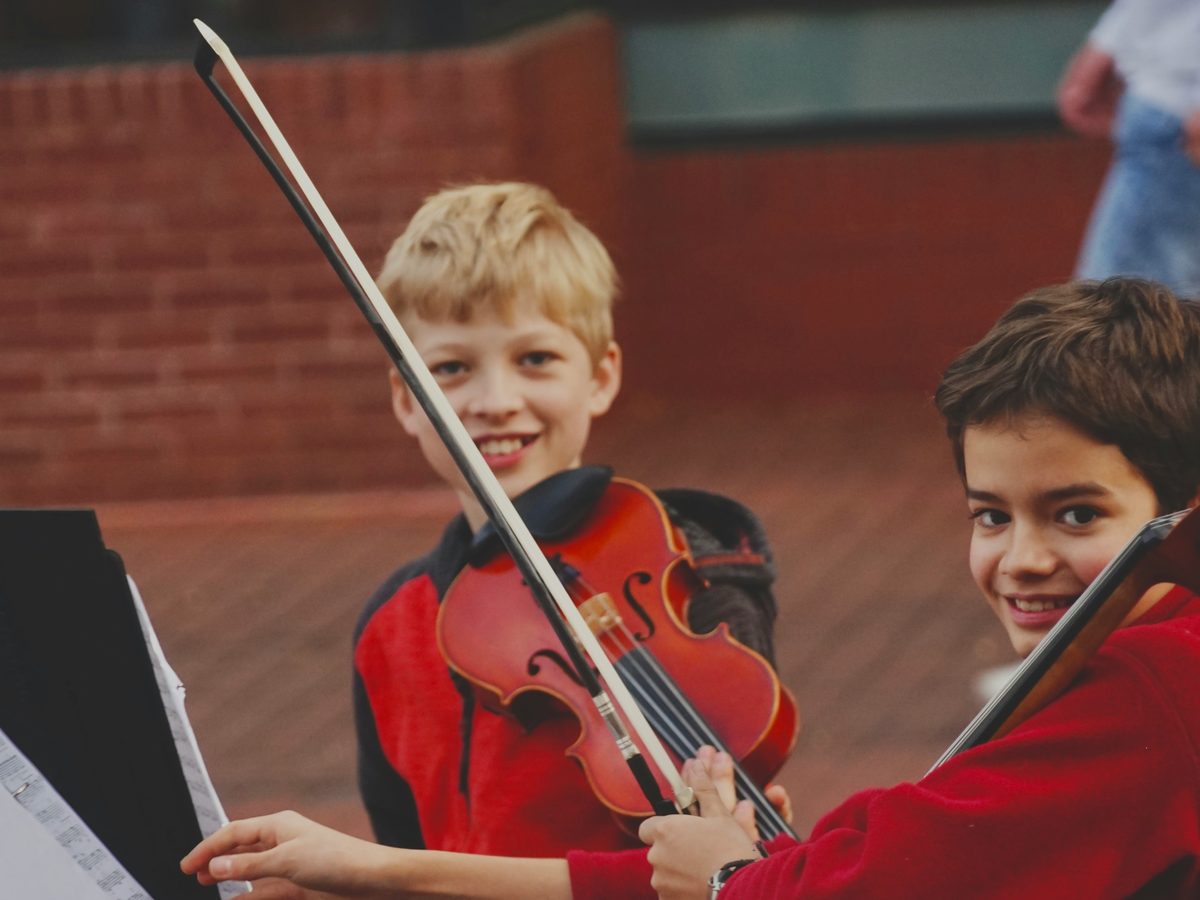
For younger children, these ideas are often introduced through games, movement, imagination, and exploration.
For adults, the lesson usually includes a little more explanation about why we're doing each step, because understanding the process often makes learning feel less mysterious.
There isn't a single "correct" first lesson. That's one of the benefits of individualized teaching.
What If I Make Mistakes?
If you're worried about making mistakes during your first lesson, I have some good news.
I'd actually be surprised if you didn't.
Learning something completely new is supposed to feel a little awkward at first. That's not a sign you're failing. It's a sign your brain is building brand-new skills.
One of the things I love most about teaching beginners is watching that moment when someone realizes, "Oh...I actually can do this."
Sometimes it happens in the first fifteen minutes. Sometimes it happens after a few lessons.
Either way, it always starts with giving yourself permission to be a beginner.
"Your first violin lesson isn't an audition. It's simply the beginning of a relationship with music."
For Parents
Some parents reach out still wondering whether their child is even the right age to start. If that's you, how old a child should be to start violin is worth a read before your first lesson—readiness usually matters more than age.
Parents often apologize before lessons even begin.
- “I don't know anything about music.”
- “I hope I'm able to help.”
- “I've never played an instrument.”
I hear these comments all the time.
The truth is, you don't need to know how to read music or play the violin to support your child. Children benefit most from parents who are encouraging, curious, and willing to celebrate small victories.
A good teacher doesn't expect you to become the music expert at home.
We're partners. My job is to guide the musical learning so you can focus on supporting your child as they grow—and as they settle in, you may find it helpful to read about what normal progress actually looks like.
For Adult Beginners
One of my favorite conversations is with someone who says, "I've wanted to do this for years."
Sometimes decades.
Life gets busy. Careers happen. Families grow. We tell ourselves we'll start someday.
Then one day, someday arrives.
Adult beginners often bring patience, curiosity, and life experience that become tremendous strengths during lessons.
No, you won't sound like a professional after your first lesson. Neither did anyone else.
Learning as an adult isn't about catching up to someone who started at five years old. It's about discovering that you can still learn something meaningful—and enjoy the process along the way. If you're curious what that process actually looks like week to week, I've written more about the real timeline of learning violin as an adult.
What About Practice?
Another question I hear often is:
"How much should I practice?"
You don't need hours every day.
In fact, beginners usually benefit much more from short, consistent practice than long sessions that leave them feeling frustrated.
Before your first lesson ends, we'll talk about realistic goals for the week ahead. I'd much rather see someone practice for ten focused minutes several times during the week than try to squeeze an hour into an already busy schedule.
The goal isn't perfection. The goal is building a routine that feels sustainable enough to come back to tomorrow.
Every Student's Journey Looks Different
One of the biggest myths about learning violin is that everyone should progress at the same pace.
They won't.
Some students feel comfortable with rhythm right away. Others have a wonderful ear but need more time coordinating the bow. Some children love performing. Others quietly build confidence before they're ready to share. Adults bring different strengths than young learners.
No two musical journeys are identical. That's one of the things I love most about teaching.
Lessons become much more meaningful when we stop asking, "Am I keeping up?" and start asking, "What am I learning today?"
Ready to Begin?
Your first violin lesson isn't an audition. It's not a test.
It's simply the beginning of a relationship with music.
Whether you're looking for violin lessons for your child, returning to the instrument after years away, or finally deciding it's your turn to learn, my hope is that your first lesson leaves you feeling more confident than when you walked through the door.
Every musician starts somewhere. I'd be honored to help you begin yours.
Denver and Online Violin Lessons
If you're looking for violin lessons in Denver, or thoughtful online violin lessons from anywhere, you're always welcome to reach out with questions before getting started.
Finding the right teacher matters, and I'm happy to help you decide whether Vibrations Violin Studio is the right fit for your musical journey.
Get in Touch