Parents and adult beginners ask me this question in slightly different ways. A parent might wonder whether their six-year-old will get enough support through a screen. An adult might wonder whether starting online means settling for less, or whether driving across town each week is really worth it.
Underneath both versions is the same worry: choosing the wrong format and spending the first months of lessons on something that doesn't quite work.
My honest answer is that neither format is better for every beginner. In-person lessons make it easier to see and adjust physical setup right away, which can matter a lot for young children and for anyone whose posture or bow arm needs close attention. Online lessons can support real, steady progress when the teaching is adapted to the camera, and they remove travel from the equation. The better fit depends on the learner's age and independence, their goals, the kind of feedback they need, and what's practical for their life right now.
What Actually Changes When Lessons Move Online?
The core of a lesson stays the same: I'm watching, listening, demonstrating, and helping you figure out what to work on next. What changes is how each of those happens.
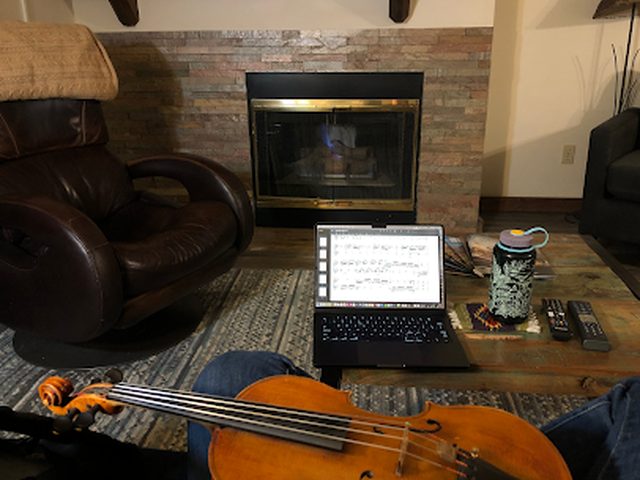
Seeing happens through a single camera angle at a time. If I need to check whether a bow is traveling parallel to the bridge, I might ask you to turn slightly, or to move the camera so I can see from the side. Hearing happens through a microphone, which is very good at carrying pitch and rhythm and a little less faithful to the subtle colors of tone. Demonstrating works well, though I'll often show a movement more slowly or from a different angle than I would in the room. And because I can't simply reach over to adjust a thumb or an elbow, I rely more on clear verbal cues and on helping you notice what your own body is doing.
That last part has a quiet benefit. Students learning online often become good at describing and self-checking their setup, because they've had to. If you'd like a fuller picture of how online lessons work day to day, can you learn violin online covers it in more detail.
What In-Person Lessons Make Easier
Being in the same room gives a teacher a few practical advantages, especially early on:
- Seeing posture, violin position, and bow hold from every angle at once, without adjusting a camera
- Hearing tone in the same acoustic space, including the small details a microphone can smooth over
- Making an adjustment and checking it immediately, several times in a row
- Offering a light, hands-on correction to a wrist or shoulder, when the student is comfortable with that
- Playing together without the slight delay of a video call
These advantages matter most when habits are still forming. The first weeks of violin are full of small physical details, like where the violin rests, how the fingers curve around the bow, and how relaxed the left hand stays. Getting those comfortable early makes everything afterward easier. That doesn't mean they can't be taught online. It means in-person lessons give a teacher a few more tools for teaching them.
Which Format Fits Which Learner?
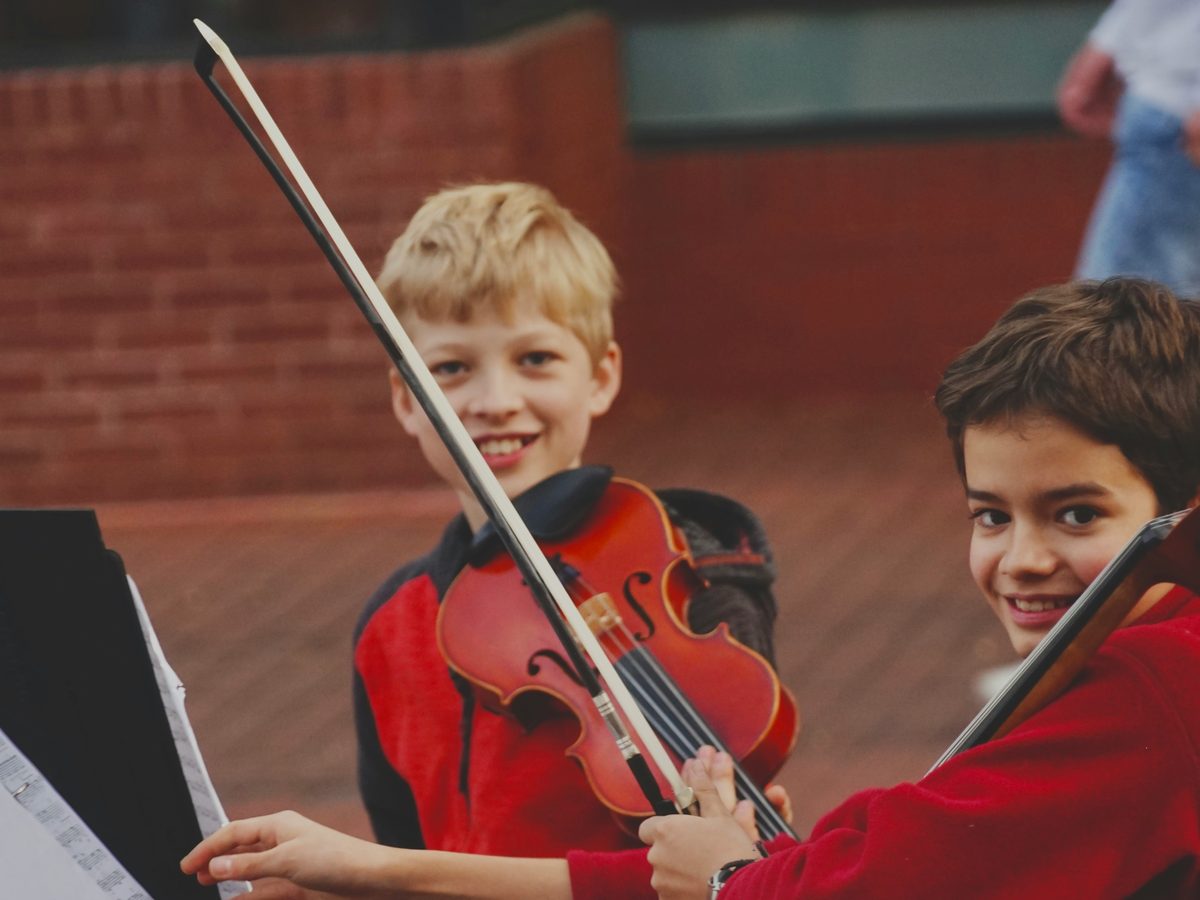
Young children. Very young beginners usually learn through imitation, movement, short activities, and a lot of gentle physical guidance. In person, much of that can happen naturally. Online, it can still work, but a parent or caregiver often becomes the teacher's extra pair of hands: helping position the violin, keeping the camera angle useful, and carrying routines into the week. Every child is different, so I think about readiness and attention rather than a fixed age. How old should my child be to start violin goes deeper into what readiness looks like.
Adult beginners. Adults can usually manage their own setup, follow verbal explanations, and ask questions as they come up, which makes online lessons a realistic option from the very first lesson. The deciding factors tend to be practical: whether you have a quiet space to play, whether travel time would make lessons hard to sustain, and whether you'd feel more confident with someone in the room while you find your footing.
Returning players. If you played years ago, you probably remember more than you expect, along with a few habits you'd rather not keep. Online lessons work well for rebuilding repertoire, reading, and confidence. If old tension in the bow arm or left hand is getting in the way, a teacher who can see you from every side can sometimes untangle it faster. Returning to violin after years away has more on what to expect.
Format is also only one part of the decision. Adults weighing one-on-one lessons against learning alongside others might also find private violin lessons vs. group classes for adults helpful.
Online vs. In-Person: A Side-by-Side Look
| Aspect | Online | In Person |
|---|---|---|
| Seeing technique | One camera angle at a time | Every angle at once |
| Hearing tone | Clear pitch and rhythm; subtle tone is softened | Full detail in a shared room |
| Adjustments | Verbal cues and demonstration | Immediate, with hands-on help if welcome |
| Travel | None | Time to and from each lesson |
| Home setup | A quiet space, a camera, and a steady connection | Nothing beyond your instrument |
| Young children | Works best with a parent nearby to help | Easier to guide physically and keep engaged |
"The format shapes how a lesson happens. The teaching is what shapes how much you learn."
How to Choose
In-person lessons may be the better place to start if:
- The student is a young child who learns best through movement and gentle physical guidance
- You'd like close, every-angle attention to setup while first habits are forming
- Old tension or habits from previous playing need untangling
- You live within a manageable distance and the travel feels sustainable
Online lessons may be the better place to start if:
- Travel would make weekly lessons hard to keep up
- You're comfortable following verbal cues and checking your own setup
- You have a quiet space where you can stand and play with room to move
- The teacher you most want to learn from isn't nearby
If you see yourself in both lists, that's common. In that case, the teacher matters more than the format. Someone who observes carefully, explains things more than one way, and adjusts to you will make either format work better.
Can You Change Formats Later?
The choice you make at the beginning doesn't have to be the one you keep. A student who starts in person to get their setup comfortable may later find online lessons easier to fit into a busy season. Someone who starts online may decide they'd like in-person time when they're refining tone or working through a stubborn habit.
What helps most is being honest with your teacher about what's working and what isn't. Lessons should change as your needs change, and the format is one of the things you can talk through together.
Frequently Asked Questions
Do online violin lessons cost less than in-person lessons?
Not necessarily. Many teachers price online and in-person lessons similarly, because you're still receiving individual instruction and feedback. The savings online are usually in travel time rather than the lesson fee, so it's worth asking each teacher directly.
Is the first violin lesson different online?
A little. Part of a first online lesson goes to positioning the camera so the teacher can see your posture, bow arm, and left hand clearly. After that, the priorities are the same as in person: a comfortable setup, healthy habits, and a confident start.
Can a young child take violin lessons online?
Some can, especially with a parent or caregiver nearby to help with setup and practice routines. Very young beginners often need more physical guidance, so in-person lessons can be an easier place to start. It depends on the individual child.
Can a teacher hear my tone accurately over video?
Mostly, yes. Pitch, rhythm, and the overall shape of your sound come through clearly. Video calls do soften some of the finer details of tone, which is one reason in-person time can be especially useful when you're refining your sound.
Violin Lessons in Denver and Online
Vibrations Violin Studio offers private violin lessons for adults and children in Denver, Colorado, with online lessons available for students where that's a good fit. In either format, lessons are built around each student's goals, pacing, and questions.
If you're not sure which format suits you or your child, you're welcome to reach out for a low-pressure conversation. We can talk through your goals, your schedule, and what kind of support would help most, then figure out a good place to start.
Book a 15-Minute Intro Call